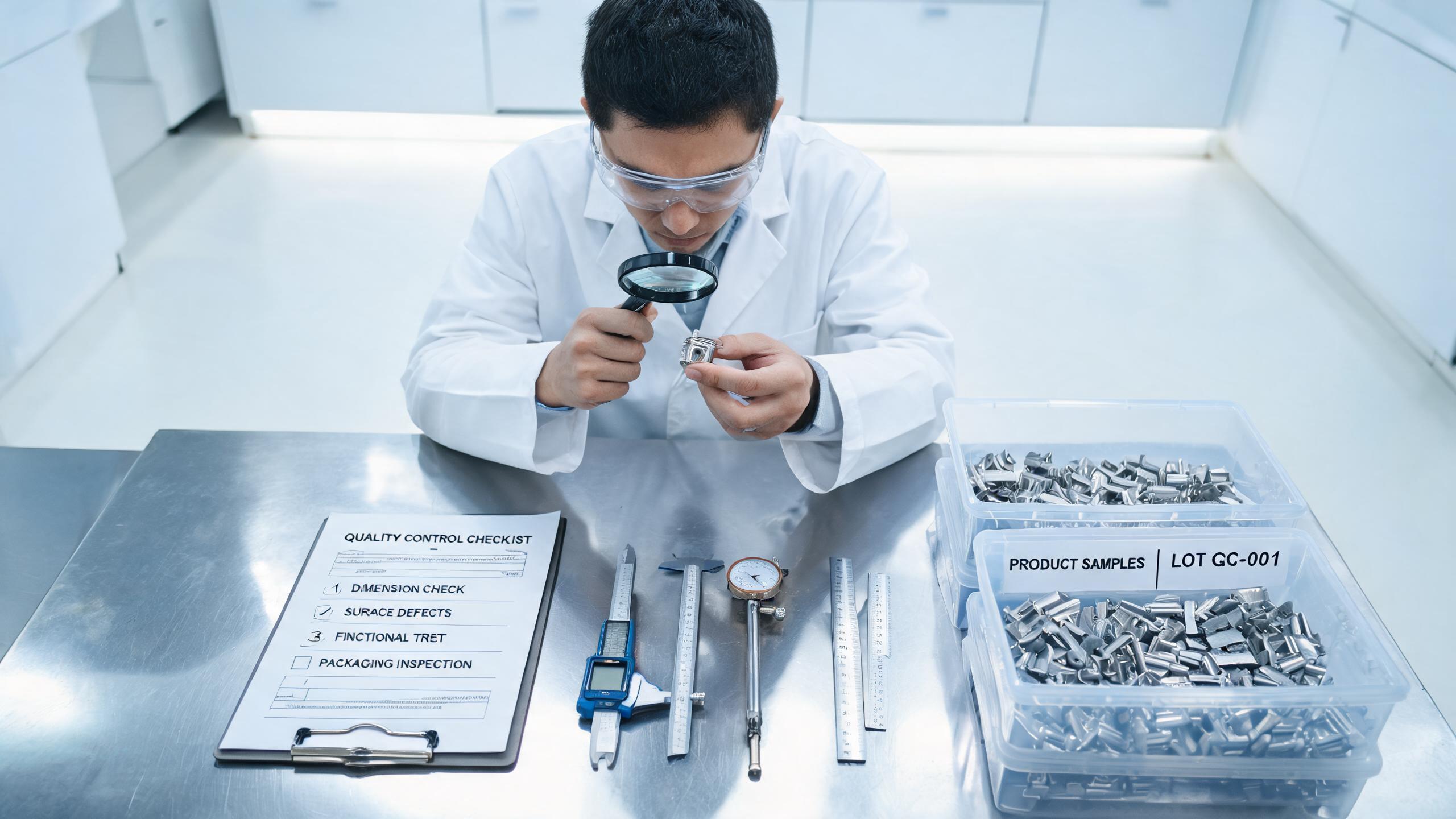
Quality issues are the #1 reason importers lose money when sourcing from China. A bad batch can mean costly returns, damaged customer relationships, and wasted time. The good news is that most quality problems are preventable — if you set up proper checkpoints throughout production instead of only inspecting at the end.
Here's our three-stage quality control framework that we use for every client order.
Stage 1: Pre-production inspection
Quality starts before production does. The pre-production (or "incoming") inspection verifies that your supplier is using the right materials and components — before they make thousands of units with the wrong ones.
What to check:
- Raw materials and components — Verify material type, grade, thickness, and specifications match your requirements. Ask for material certificates where applicable.
- Molds and tooling — If you're paying for custom molds, inspect them before production begins. Check dimensions, surface finish, and expected lifespan.
- Golden sample approval — Confirm the factory has your approved sample on hand and that all production will be measured against it.
- Production plan — Review the production schedule, batch sizes, and quality targets with the factory manager.
Catching a material issue at this stage saves you from an entire production run of defective goods. It's the most cost-effective QC checkpoint there is.
Stage 2: During production inspection
Also called "DUPRO" or in-line inspection, this check happens when 10-30% of production is complete. The goal is to catch issues early while there's still time to fix them without delaying the whole shipment.
What to check:
- First article inspection — Examine the first finished units off the production line against your specifications. Check dimensions, color, functionality, labeling, and packaging.
- Mid-line process checks — Walk the production line and observe the manufacturing process. Are workers following the correct procedures? Is the equipment calibrated? Are defective parts being set aside?
- Workmanship consistency — Pull random samples from the production batch and check for consistent quality. Watch for cosmetic defects, functional issues, and assembly errors.
- Production progress — Verify the factory is on schedule and confirm the expected completion date.
During-production checks are especially important for complex products or first-time orders, when there's a higher risk of miscommunication about specifications.
Stage 3: Pre-shipment inspection
The final checkpoint — also called final random inspection (FRI) or pre-shipment inspection (PSI). This happens when 100% of production is complete and at least 80% is packed and ready to ship. This is your last chance to catch problems before the goods leave the factory.
What to check:
- Final random sampling — Use internationally recognized standards like AQL (Acceptable Quality Limit) to determine how many units to inspect. Randomly sample from multiple cartons across the batch.
- Product specifications — Verify dimensions, weight, color, material, labeling, and functionality match your approved sample and specifications sheet.
- Packaging check — Inspect cartons, inner packaging, hang tags, barcodes, and shipping marks. Drop-test cartons if appropriate for your product.
- Quantity verification — Count the total number of units and cartons to make sure you're getting what you ordered.
If the inspection passes, you release the balance payment and the goods ship. If it fails, the factory reworks the issues and you schedule a follow-up inspection.
Bonus: What to do when quality issues are found
Finding issues isn't the problem — ignoring them is. When defects are discovered:
- Document everything with photos, measurements, and a clear defect list.
- Classify defects as critical, major or minor so the factory understands the severity.
- Require a corrective action plan from the factory — how they'll fix it, how long it will take, and how they'll prevent it from happening again.
- Re-inspect after rework — never assume the problem is fixed without verification.
- Hold payment leverage — don't release final payment until the inspection passes.
Conclusion: Proactive QC beats reactive problem-solving
Many importers only do a final inspection and hope for the best. But by the time you find a problem at the pre-shipment stage, the goods are already made — and fixing them is expensive and slow. A three-stage approach catches issues early, reduces rework costs, and keeps your production on schedule.
Need help setting up quality control for your China orders? Get in touch — we can arrange inspections at any stage of production.