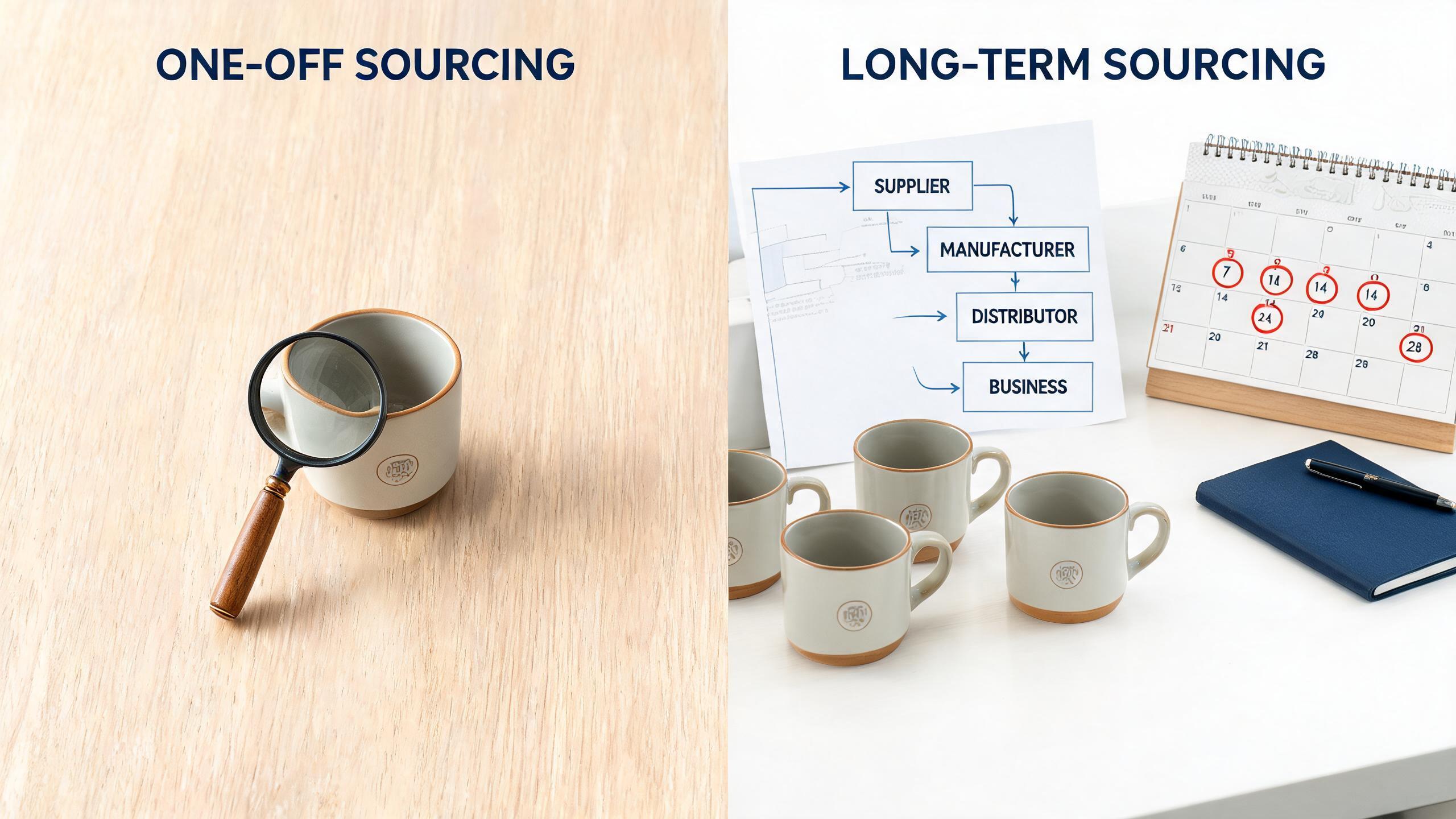
When working with a China sourcing agent, you typically have two options: a one-off project for a single product, or a long-term monthly retainer for ongoing supply chain management. Which one is right for you depends on your business stage, product range, and growth trajectory.
Let's break down both models so you can make an informed choice.
One-off sourcing: Project-based engagement
In a one-off arrangement, you pay a single project fee for help sourcing a specific product. The agent finds suppliers, gets quotes, coordinates samples, manages quality inspection and shipment — and then the engagement ends.
Best for:
- Single product needs — You need one specific item sourced and that's it.
- Testing the market — You're validating a product idea and want to start small before committing.
- One-time purchases — You're buying for a specific event, promotion, or project with no repeat orders planned.
- First-time importers — You've never sourced from China before and want to learn the process with low commitment.
Pros:
- Low commitment — pay only for what you need
- Great way to test a sourcing agent before a bigger commitment
- Clear, predictable cost for a defined scope
Cons:
- Higher per-project cost compared to retainer pricing
- No category exclusivity — the agent could work with your competitors
- No ongoing supplier relationship management
- Each new product starts the process from scratch
Long-term retainer: Ongoing supply chain management
With a monthly retainer, the sourcing agent becomes your dedicated China team. They manage your existing suppliers, source new products, handle quality control, monitor production, coordinate with freight forwarders — and continuously look for ways to improve your supply chain.
Best for:
- Ongoing product lines — You have established products with regular reorders.
- Multiple SKUs — You source several different products and need someone managing all of them.
- Scaling businesses — You're growing fast and need a supply chain that can keep up.
- Brand-focused companies — Quality consistency and supply chain reliability are critical to your brand.
Benefits of long-term:
- Deeper supplier relationships — Over time, your agent builds real relationships with factories, which translates to better priority, faster problem-solving, and more flexibility.
- Better pricing — Lower per-project cost at volume, plus ongoing negotiation for better prices as your orders grow.
- Priority access — Your projects get priority attention, especially during peak seasons when factories are busy.
- Category exclusivity — Most reputable agents (including us) won't work with your direct competitors in your market when you're on retainer.
- Proactive improvement — A long-term partner actively looks for cost savings, quality improvements, and alternative suppliers — not just reacts to your requests.
- Factory visits & translation — If you travel to China, your team handles itineraries, meetings, and on-the-ground translation at no extra charge.
Cost comparison: Per-project vs. monthly fee
One-off project fees are typically a percentage of the order value or a flat fee per product. Retainer fees are monthly and based on the scope of work — number of products, order volume, and complexity of your supply chain.
As a general rule: if you're sourcing 2+ products per quarter or have regular reorders, a retainer is almost always more cost-effective on a per-project basis. And the intangible benefits — exclusivity, priority, proactive management — add value that's hard to quantify but easy to feel.
When to start with one-off and upgrade
Many of our clients start with a single project to test the relationship, then move to a retainer once they see the value. This is a smart approach — especially if:
- You're new to working with a particular agent and want to build trust first
- You're launching a new product line and want to validate it before committing long-term
- You're currently sourcing 1 product but plan to add more in the next 6-12 months
A good sourcing agent will make the transition smooth — and your project fee is often credited toward the retainer if you upgrade within a certain timeframe.
Conclusion: Choose based on your stage and trajectory
There's no universally "better" model — it depends on where your business is today and where you're heading. If you're just starting out or have a single one-time need, a one-off project is the right entry point. If you're running an established business with ongoing sourcing needs, a long-term retainer will give you better results, better pricing, and peace of mind.
Not sure which model fits your situation? Get in touch — tell us about your business and we'll recommend the right approach, honestly.